Balancing Act: The Challenges of Being a Local Councillor and Serving on an External Board

Introduction – Local councillors play a crucial role in shaping their communities, advocating for residents, and making decisions that impact their local areas. However, when they are appointed to serve on external bodies or boards, it can become a delicate balancing act between political responsibilities and their duty to work for the external board without any political bias. We thought it worthwhile to explore the difficulties faced by local councillors when they take on these dual roles and the importance of maintaining impartiality in external appointments.

The Role of a Local Councillor – Local councillors are elected representatives who work to address the concerns and needs of their constituents on a whole range of matters; we serve as a bridge between the community and the local government, Havant Borough Council is made up of 38 councillors. Councillors are democratically accountable to the residents of their ward including those who did not vote for us.

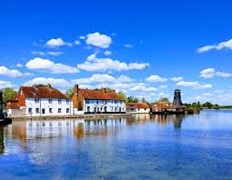
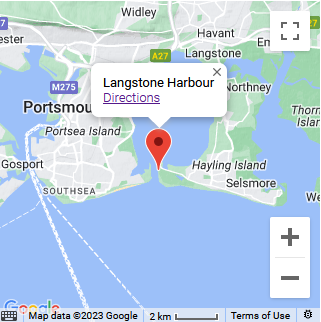
External Appointments: A New Challenge – Local councillors are sometimes selected to serve on external bodies or boards, such as non-profit organizations, advisory committees, or even corporations; in the case of Havant the Langstone Harbour Board Membership of the Board is made up of:

  • 6 councillors from each of the two local authorities, Portsmouth City Council and Havant Borough Council,
  • 1 councillor from Hampshire County Council
  • 2 members of the Advisory Committee representing a wide range of Harbour stakeholders.

The Board meets 5 / 6 times every year. The programme of meetings, minutes and papers are published on the LHB  website. The Board responsibilities are wide ranging (https://www.langstoneharbour.org.uk/board-responsibilities)

OPEN PORT DUTYCONSERVANCY DUTY
General Duty to Ensure Safe &  Efficient Port Marine OperationsStakeholder Engagement Responsibility
Civil Contingencies & Port Security DutyRESPONSIBILITY FOR REVISING DUTIES AND POWERS
Financial ResponsibilityEnvironmental Duty
Responsibility to Promote & Improve the Harbour as an Asset

The appointment of councillors to external bodies poses a concern in that it can lead to frequent turnover in council representation, e.g. during election cycles (some councillors losing their seats and new inexperienced councillors), resulting in a lack of continuity. They also present a unique set of challenges:

The Challenge of Political Neutrality – Councillors are expected to leave their party affiliations and biases behind. This can be particularly challenging, as their political beliefs may strongly influence their perspectives on various issues.

Striking a Balance – Balancing the responsibilities of being a local councillor and serving on an external board requires a delicate touch. Here are some of the key challenges that councillors must navigate:

  1. Conflict of Interest: Local councillors cannot be seen to have conflicts of interest between their council duties and the goals of the external organisation. This might mean excusing themselves from certain decisions or discussions.
  2. Public Perception: The public expects their elected representatives to be transparent and accountable. Any perception of political bias in their external roles can create mistrust in their ability to make impartial decisions at the local level.
  3. Time Commitment: Serving on an external board demands time and effort, which can make it more difficult for a councillor to fulfil their local duties effectively.
  4. Policy Alignment: Striking a balance between their personal beliefs and the policies and objectives of the external organisation. This can be challenging if there is a misalignment between the two.
  5. Communication: This must be clear and transparent with their constituents about their external roles, emphasising their commitment to impartiality and the benefits it brings to the community.

Conclusion – Being a local councillor is already a demanding and important role. When appointed to external bodies, the challenges of maintaining political neutrality can be complicate our work. On the plus side external appointments can also bring valuable insights, expertise, and connections to the local community.

We hope the above helps to explain how  complex this combination of being a councillor and combining it with external appointments can be, being alert to potential conflicts of interest, prioritise transparency and impartiality, and effectively communicate our commitment to serving both the community and external organisations without political bias. Striking this balance can be challenging, but it is essential to uphold the integrity of local government and ensure that decisions are made in the best interest of the public.

Motion for the Ocean

The motion, brought by Councillor Phil Mundy, called for Havant Borough Council to work with Portsmouth City Council to develop regular water quality sampling in order to understand the environmental, health and safety impact within the harbour.

During a statement responding to the motion, Councillor Elizabeth Lloyd, Cabinet Lead for Local Plan, Environment and Water Quality, said: “I can reassure this council, its members and our residents that we are already working closely with the Environment Agency, Portsmouth City Council, Southern Water and the Langstone Harbour Board to ensure our water quality is the best it can be.”

“Portsmouth City Council has already agreed it will take regular seawater samples to monitor water quality and track changes.  These findings will be reported back to the Harbour Board, of which I am a member.  

“We are aware of public concern about the quality of our seawater, especially among water sports enthusiasts and swimmers.  We’re in regular contact with campaigners and have listened to their concerns.

“Together we will continue to protect our residents who use the harbour and hold Southern Water accountable for any prejudicial findings.”

It is the UN Ocean Decade and the tide is turning on Ocean neglect. Our Ocean and climate are in a state of emergency, and whilst many local authorities have already declared a climate emergency, the Ocean is still missing from many of our climate action plans. We want to support local and national governments take action to improve Ocean health.

Call a Motion for the Ocean

More about water testing…………..

In March 2023 Havant Council agreed a full programme of water quality sampling would begin in Langstone Harbour. https://www.havant.gov.uk/2023/havant-borough-council-agrees-motion-continue-monitor-seawater-sampling

As part of the programme, seven sampling sites were identified and water samples taken from those areas are being tested during a 20-week period, to understand what the environmental, health and safety impacts are within the harbour. The samples are being taken by Langstone Harbour Board, who already have a presence on the water, before being taken for independent laboratory analysis.

It was felt felt that monitoring was necessary to ensure public health protection, as the area is popular with water sport enthusiasts who regularly undertake activities such as kite surfing, wind surfing, paddle boarding, kayaking, and sailing.

The council is already working closely with the Environment Agency, Portsmouth City Council, Southern Water and the Langstone Harbour Board to ensure water quality is the best it can be however the councils own harbour sampling programme will provide meaningful results that will serve as judgement to the quality of the water.

Truths & Myths of being a Councillor on Hayling Island

Being a local councillor, whether on Hayling Island or elsewhere, comes with its own set of truths and myths. Being a councillor is a journey not an instant accolade; It takes time to build a reputation and trust in the community.

 Here are some common perceptions and realities:

Truths

  1. Community Impact: As local councillors we have the opportunity to make a real impact on their community. We can advocate for projects, policies, and services that directly benefit the residents of Hayling Island
  2. Decision-Making: We are involved in important decision-making processes related to local governance, including planning, budgets, and services. Budget constraints, and challenging decisions are all part of the job. Not all decisions are popular; council meetings can be lively, with diverse opinions. Finding common ground takes skill and compromise.   
  3. Accessibility: We are typically more accessible to residents than higher-level politicians; able to listen to local concerns and relay them to the appropriate officers
  4. Responsibility: With a responsibility to represent the interests of our residents. We are accountable for our actions and decisions.
  5. Community Engagement: Serving as a councillor often requires active engagement with the community. This can include attending meetings, participating in local events, and responding to resident’s inquiries. Council’s budgets do not run to financing all the projects residents would like. Finding Funds / sponsors for local projects involves much footwork

Myths

  1. It’s Just a Part-Time Job: While being a local councillor is often considered a part-time role, the responsibilities can be significant. Councillors may spend a substantial amount of time attending meetings, researching issues, and meeting with residents. Some Hayling Island Councillors are Cabinet Members and all of us sit on an external body.  
  2. Instant Results: We do not always see immediate results from our efforts. Achieving meaningful change is often frustrating and requires patience and persistence, as well as working within the constraints of local government processes.
  3. Limitless Power: Councillors have influence, but do not have unlimited power. Decisions are made collectively, working with colleagues and officers to achieve their goals. However, not all decisions are made at local level and are subject to central government Planning is a really god example of this:-

Planning

In the U.K. central government has a significant role in influencing local council planning decisions through various mechanisms and policies. The UK planning system is highly regulated, subject to both national and local considerations. Ways in which central government affects local councils’ planning decisions in the UK:

  • National Planning Policy Framework (NPPF)
  • Housing Targets
  • Environmental and Heritage Designations
  • Infrastructure Investment
  • National Infrastructure Projects
  • Appeals Process
  • Incentives and Penalties
  • Planning Inspectorate
  • Policy Updates
  • Funding & Grants
  • Note: penalties or sanctions may be imposed if local councils fail to comply with national planning policies.
    • 4. Financial Gain: Contrary to popular belief, local councillor positions are not salaried but do receive a modest allowance (varying from council to council)
    • 5. No Political Parties: Councillors are usually affiliated to a political party, although there may be some independents. Party politics influence local government decisions and dynamics.
    • 6. No Personal Agenda: While councillors are expected to prioritise the needs of their community, it’s essential for councillors to maintain transparency and ethical conduct.

7. Havant Council receives the full amount of Council tax Havant Borough Council only receives 11% of the total our residents pay. Based on an average Band D property in the borough the total of £2,018.20 you will pay during 2023/24, will go to:

Hampshire County Council receive 72% £1460.25
The Police and Crime Commissioner for Hampshire 13%£ 251.46
Hampshire and IOW Fire and Rescue Service 4%£ 80.43
Havant Borough Council receive 11%£226.06
  

To see how Havant Borough Council spends the £226.06 p.a. click on: https://cdn.havant.gov.uk/public/documents/How%20your%20Council%20Tax%20is%20spent.pdf

In conclusion, being a Hayling Island councillor is a mix of hard work, community engagement and a love of for this unique slice of the world. It is not all myths or truths. It is a rewarding journey that brings its own set of challenges and rewards.

Hayling’s 3 Minute Ferry

https://www.youtube.com/watch?v=jdzQqeuYwQc

The Hayling Ferry is an important transport link between Portsmouth and Hayling Island in Hampshire, England. Learn about its challenges and significance in this captivating journey with James Dunlop MBE.

This a great documentary, outlining the details of the ferry’s 200 year history and the challenges it faces today

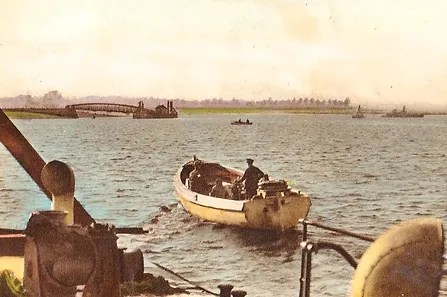
“There has been a ferry in operation between Ferry Point Hayling Island and Eastney Point Portsmouth, for at least 200 years.  Rights to run a ferry belonged to the Lord of the Manor of Hayling Island, the Dukes of Norfolk.

Rowing boats were used until 1901 when the the ferry rights were bought by the Hayling Island Steam Ferry Company, who constructed pontoons, made up the road on the Hayling side, and acquired a small steamer. The service was soon abandoned though due to the unsuitability of the steamer. “

https://www.haylingferrytrust.org/the-hayling-ferry

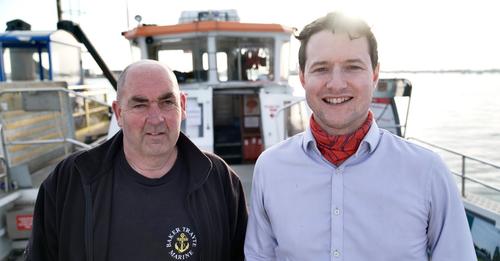
Over the years, the ferry has evolved, adapting to the changing times and technologies; and is now operated by Baker Trayte Marine Ltd, who have been providing a scheduled public route between Hayling Island and Portsmouth since 2016, when the previous operator went into administration.

In 2018, (widely reported at the time), in order to support the ferry service Langstone Harbour Board agreed to reduce its passenger fees by more than 50% as a temporary measure https://www.bbc.co.uk/news/uk-england-hampshire-45458454.amp

At the request of the Ferry, this support was extended for an additional two years, spanning the duration of the Covid-19 pandemic restrictions.  Regrettably, the Board was unable to continue to offer this support beyond April 2022, and passenger fees were restored to the original 2018 level; it has, however, consistently remained open to working with the ferry operator, emphasising data transparency and financial prudence, in order to sustain an affordable service for Hayling Island and Portsmouth residents, we are currently working together to find a solution that is fair, sustainable, and beneficial for the community as a whole.

“The Langstone Harbour Board has a fundamental duty to ensure the well-being of all stakeholders by maintaining the harbour to benefit all users, alongside actively seeking ways to minimise its dependence on public funding. While working with the Hayling Ferry to ensure the continuity of this vital service, Langstone Harbour, in its capacity as a statutory harbour authority, is duty bound to prioritise financial responsibility. and uphold its obligation to maintain a secure and navigable harbour, ensuring the security and satisfaction of all stakeholders. These conscientious efforts are integral to the Board’s commitment to effectively fulfill its regulatory responsibilities.”

Author’s note, I pulled together this post as whilst I was on holiday, I picked up on social media that the future of Hayling Ferry was thought by some to be in doubt, as well as talk of the passenger fee being increased by 366%. I think that the fact that the passenger fee was subsidised for a few years had been lost in the sands of time