
West Beach Car Park – A Balancing Act

West Beach

default

West Beach Car Park has a long and complex history, first opened in the 1950s to provide parking for visitors to the popular beach. Over the years, the car park has been expanded (at one time approx. 700 spaces) and improved to accommodate the increasing number of visitors to the island. West Beach timeline interesting history: https://coastalpartners.org.uk/project/brief-overview-of-west-beach/

In November 2022, a major storm caused significant damage to the sea defences at West Beach. The storm also washed away a large section of the car park. Havant Borough Council (HBC), the local authority responsible for the car park, made the decision to close the car park for safety reasons.

Tourists have always been welcome on Hayling and HBC recognises their significant contribution to the local economy, not only has this suffered through the loss of the car park, in addition HBC has had a major loss of revenue.  

West Beach does not attract government funding (Environment Agency) for improved sea defences as it does not protect housing and people. However, the council has been working on a solution for the car park. This has been made more difficult by a number of factors that had to be considered, including the environmental impact of any new development, the needs of local residents and businesses, and the cost of any new development.

On August 1, 2023, after a final go-ahead from Natural England the West Beach Car Park on Hayling Island was partially reopened to the public.  Located behind a height restriction barrier accommodating up to 47 vehicles. This additional parking was seasonal basis (May to September) to ease some of the parking pressures on the island, particularly during the summer months.

This area of Hayling Island beach is designated as Site of Special Scientific Interest (SSSI) and HBC negotiated long and hard with Natural England to allow us to use this piece of land for car parking for 47 vehicles. The land could not be prepared as is the case with other designated car parks it had to remain natural except for some demarcation posts.

Following heavy rainfall and or storms when the ground became waterlogged, the car park had to be closed periodically to stop cars getting stuck. You will remember that August was particularly wet.

As winter approaches there has already been some stormy wet weather. If there is similar weather as has been experienced in the last few years with increased storms, it is highly likely that this car park will cease to exist for next season.

The situation is really frustrating to all parties, local residents, tourists, Hayling Councillors and HBC but due to the constraints placed on the council by Natural England and the decision made by HBC to allow West Beach to evolve naturally following the removal of failing sea defences, there is nothing else that can be done at this time.

HBC together with Coastal Partners must use their resources to protect property and business in the more heavily populated area of Eaststoke and South Hayling.  The 38km of Hayling Island coastline is constantly evolving and as such is under constant review by coastal engineers. The Hayling Island Coastal Strategy can be viewed on HBC website it is an extremely interesting and easy-to-follow document if you have some spare time. It certainly gives perspective to the challenges that Hayling faces in terms of rising sea levels and climate change. (Links below)

West Beach Maintenance — Coastal Partners   west-beach-update-march-2021.pdf (coastalpartners.org.uk)

https://coastalpartners.org.uk/project/history-of-west-beach-faqs/
£600,000 for Billy Trail Upgrade – Winter 2023

The Hampshire County Council is investing £600,000 to create a new cycleway/footpath along The Billy Trail from the bridge to ESSO Beach on the Hayling Billy Coastal Path. This project is funded by a government grant for Active Travel and is expected to be completed by next year’s holiday season. It is part of Councilor Lance Quantrill’s proposals to improve local travel infrastructure.

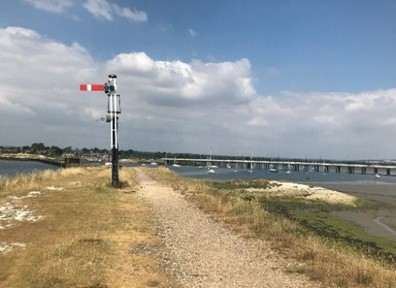
Top End of Hayling Billy Line Hayling Island near the bridge

The Hayling Billy Coastal Path is a track used by walkers, cyclists and horse riders along the bed of the old railway line between Havant and Hayling Island

£600,000 is being invested by Hampshire County Council (HCC) to create a new cycleway/footpath along The Billy Trail from the bridge to ESSO Beach for cyclists and walkers.

Surveying has just been completed this Autumn and, subject to weather conditions, work is scheduled to be finished in time for next year’s holiday season.  

In addition to a new hard surface, there will be a soft path for horses.

It is hoped that cyclists, from those with £3,000 road/racer machines to rugged off-road bikes, will be encouraged to leave the Havant Road to vehicle drivers, who will not then need to overtake on the ESSO straight.

Funding for the scheme has come in the form of a government grant for Active Travel, which means that Residents’ Council Tax will not be diverted to this project.

This is one of the 12 proposals Lance Quantrill, Hayling Island’s County Councillor, submitted for HCC’s Local Cycling and Walking Infrastructure Plan and Local Travel Plan 4.  For more details of his 12-point-plan contact Lance via office@havantconservatives.com or call 02392475066

“Navigating the Silence: The Intricacies of Councillor Abstention”

“Decisively Undecided”

In summary, local councils are essential in facilitating local governance, addressing the specific needs of communities, and ensuring that decisions made at the local level are reflective of the desires and priorities of the residents. Their impact is felt directly in the quality of life and the overall development of the communities they serve.

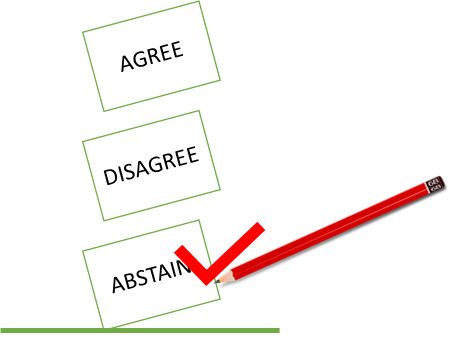
In the world of local councils, decisions often hang in the balance, awaiting the stamp of approval or dissent from elected local councillors. However, among the deliberations and debates, there is a curious phenomenon:-

So let’s look at the intriguing practice of local councillors abstaining from voting, shedding light on the reasons behind this often enigmatic choice and the impact it has on communities and the decision-making process.”

  1. Responsibility and Accountability: Local councillors are elected to represent their constituents and make decisions on their behalf. Abstaining from voting means they are not fulfilling their duty to make decisions in the best interests of the community. This can lead to a lack of accountability for their actions or inaction.
  2. Wasted Representation: When councillors abstain from voting, it effectively means that the people they represent are not being heard or represented in that decision-making process. This undermines the democratic system and can lead to disenfranchisement among constituents.
  3. Ineffective Governance: Abstentions can result in tied votes or a lack of quorum, which can lead to delays in important decisions and hinder effective governance. Local councils and external bodies rely on their members to actively participate in the decision-making process to function efficiently.
  4. Missed Opportunities: Abstaining from votes means missing the opportunity to influence or shape policies and decisions that may have a direct impact on the community. It also means missing the chance to advocate for the interests and needs of their constituents.
  5. Perceived Lack of Commitment: Abstaining too frequently can lead to a perception that the councillor lacks commitment or is disinterested in their role. This can erode trust among constituents and fellow councillors.
  6. Conflict of Interest: In some cases, councillors may abstain due to conflicts of interest. While this is generally considered acceptable and ethical, councillors should properly declare and manage conflicts of interest rather than simply abstaining without explanation.
  7. Failure to Provide Leadership: Councillors are expected to provide leadership and make difficult decisions, even if those decisions are unpopular. Abstaining may be seen as an unwillingness to take a stand or provide direction to the community.
  8. Wasted Resources: The process of convening meetings, preparing for votes, and conducting discussions consumes time and resources. Abstaining without a valid reason can be seen as a waste of these resources.

It’s important to note that there can be legitimate reasons for abstaining from a vote, such as a conflict of interest or a genuine belief that one cannot make an informed decision on a particular issue. In such cases, councillors should clearly state their reasons for abstaining to maintain transparency and accountability.

Overall, while there may be situations where abstention is necessary, it should be the exception rather than the norm, and councillors should exercise their voting responsibilities diligently to ensure that they fulfill their roles as representatives of the community. It involves a commitment to transparency, ethical decision-making, and ongoing engagement with the community.