
“Decisively Undecided”
In summary, local councils are essential in facilitating local governance, addressing the specific needs of communities, and ensuring that decisions made at the local level are reflective of the desires and priorities of the residents. Their impact is felt directly in the quality of life and the overall development of the communities they serve.
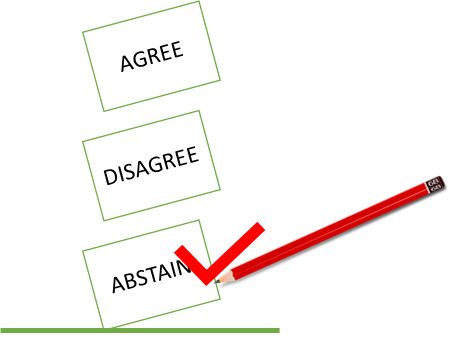
In the world of local councils, decisions often hang in the balance, awaiting the stamp of approval or dissent from elected local councillors. However, among the deliberations and debates, there is a curious phenomenon:-
Abstention.
So let’s look at the intriguing practice of local councillors abstaining from voting, shedding light on the reasons behind this often enigmatic choice and the impact it has on communities and the decision-making process.”
- Responsibility and Accountability: Local councillors are elected to represent their constituents and make decisions on their behalf. Abstaining from voting means they are not fulfilling their duty to make decisions in the best interests of the community. This can lead to a lack of accountability for their actions or inaction.
- Wasted Representation: When councillors abstain from voting, it effectively means that the people they represent are not being heard or represented in that decision-making process. This undermines the democratic system and can lead to disenfranchisement among constituents.
- Ineffective Governance: Abstentions can result in tied votes or a lack of quorum, which can lead to delays in important decisions and hinder effective governance. Local councils and external bodies rely on their members to actively participate in the decision-making process to function efficiently.
- Missed Opportunities: Abstaining from votes means missing the opportunity to influence or shape policies and decisions that may have a direct impact on the community. It also means missing the chance to advocate for the interests and needs of their constituents.
- Perceived Lack of Commitment: Abstaining too frequently can lead to a perception that the councillor lacks commitment or is disinterested in their role. This can erode trust among constituents and fellow councillors.
- Conflict of Interest: In some cases, councillors may abstain due to conflicts of interest. While this is generally considered acceptable and ethical, councillors should properly declare and manage conflicts of interest rather than simply abstaining without explanation.
- Failure to Provide Leadership: Councillors are expected to provide leadership and make difficult decisions, even if those decisions are unpopular. Abstaining may be seen as an unwillingness to take a stand or provide direction to the community.
- Wasted Resources: The process of convening meetings, preparing for votes, and conducting discussions consumes time and resources. Abstaining without a valid reason can be seen as a waste of these resources.
It’s important to note that there can be legitimate reasons for abstaining from a vote, such as a conflict of interest or a genuine belief that one cannot make an informed decision on a particular issue. In such cases, councillors should clearly state their reasons for abstaining to maintain transparency and accountability.
Overall, while there may be situations where abstention is necessary, it should be the exception rather than the norm, and councillors should exercise their voting responsibilities diligently to ensure that they fulfill their roles as representatives of the community. It involves a commitment to transparency, ethical decision-making, and ongoing engagement with the community.

 Hayling Matters - by Brenda Linger & Julie Richardson